

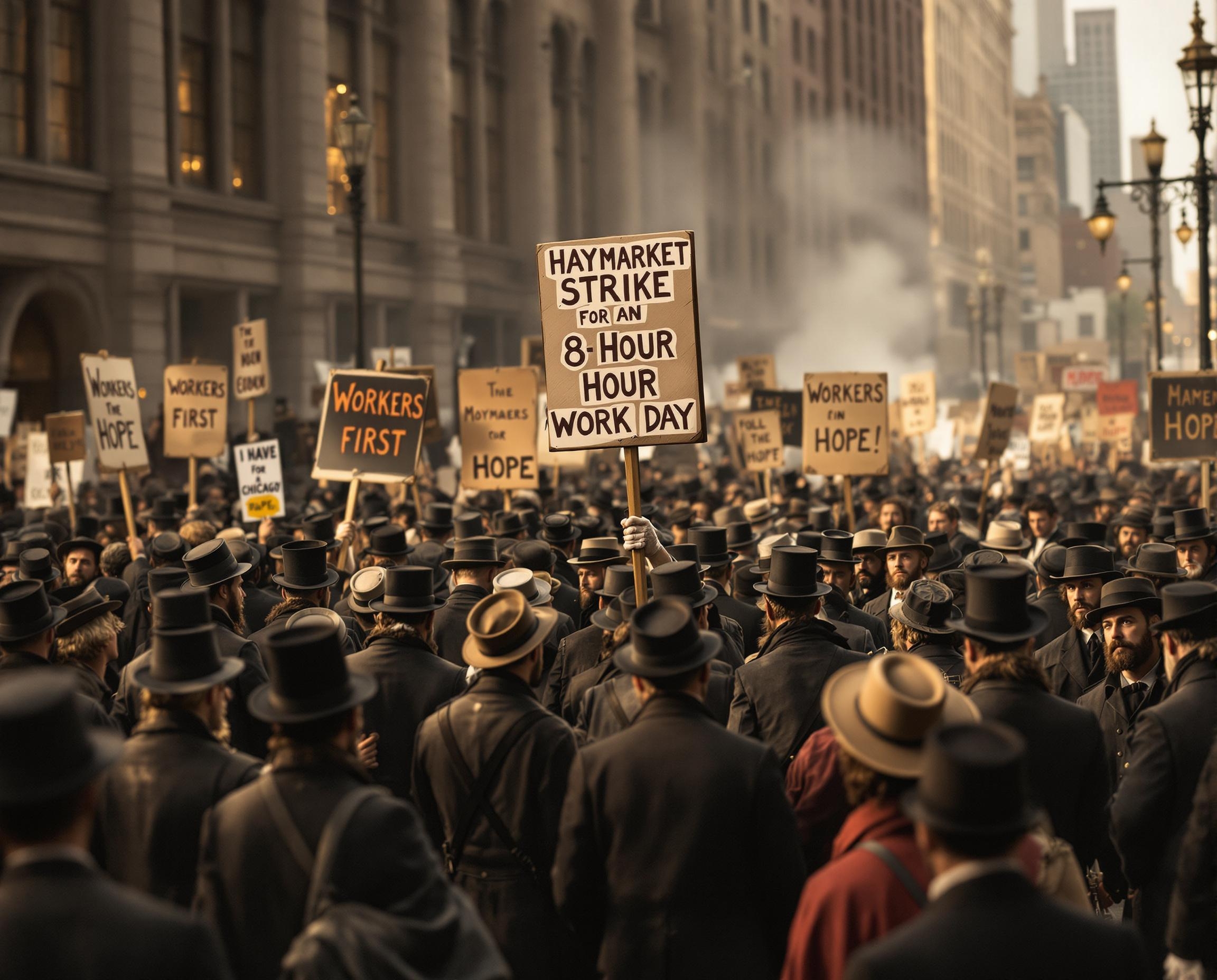
Often referred to as the Haymarket Strike or Haymarket Massacre, it was a pivotal event in American labor history that took place in Chicago on May 4, 1886. It was the culmination of a strike by workers advocating for an eight-hour workday, a major labor issue during the late 19th century.
Here’s an overview of what happened:
- Context and the Strike: The strike started as part of a broader movement for labor reforms. On May 1, 1886, tens of thousands of workers across the United States, including those in Chicago, went on strike to demand an eight-hour workday. The movement had gained significant momentum, especially among industrial workers.
- The Haymarket Rally: On May 4, a peaceful rally was held in Haymarket Square in Chicago, aimed at showing solidarity for the workers’ cause. The rally was organized by labor leaders, including Albert Parsons and August Spies, and the crowd was mostly peaceful. However, tensions were high, and a heavy police presence was already in place.
- The Bombing: As the rally was winding down and the crowd began to disperse, a bomb was thrown at the police who were attempting to break up the gathering. The bomb exploded, killing one police officer and wounding several others. The police then opened fire on the crowd, and chaos ensued. At least seven police officers and an unknown number of civilians were killed, with many more injured.
- Aftermath and Trials: Following the bombing, a crackdown on labor activists and anarchists took place. Eight men were arrested and charged with conspiracy and murder, even though there was little evidence directly linking them to the bombing. Four of the men were executed, one committed suicide in prison, and the others were either sentenced to jail or later released. This trial and the subsequent executions were controversial and sparked outrage within the labor movement.
- Legacy: The Haymarket affair had a lasting impact on labor movements in the United States and around the world. It led to increased repression of labor activism in the short term. Still, it also helped to galvanize the labor movement and bring international attention to workers’ rights, particularly the demand for the eight-hour workday. The May Day holiday, which celebrates labor movements and workers’ rights, originated from this event.
The Haymarket affair remains a symbol of the struggles for labor rights and the lengths to which workers have gone to secure basic workplace protections.
The information provided on this website is for educational and informational purposes only. This information is not intended to be taken as legal, medical, or professional advice. The views expressed are those of the author(s) and do not necessarily reflect those of the company or its affiliates. Visitors are encouraged to conduct further research and consult with relevant professionals.


