
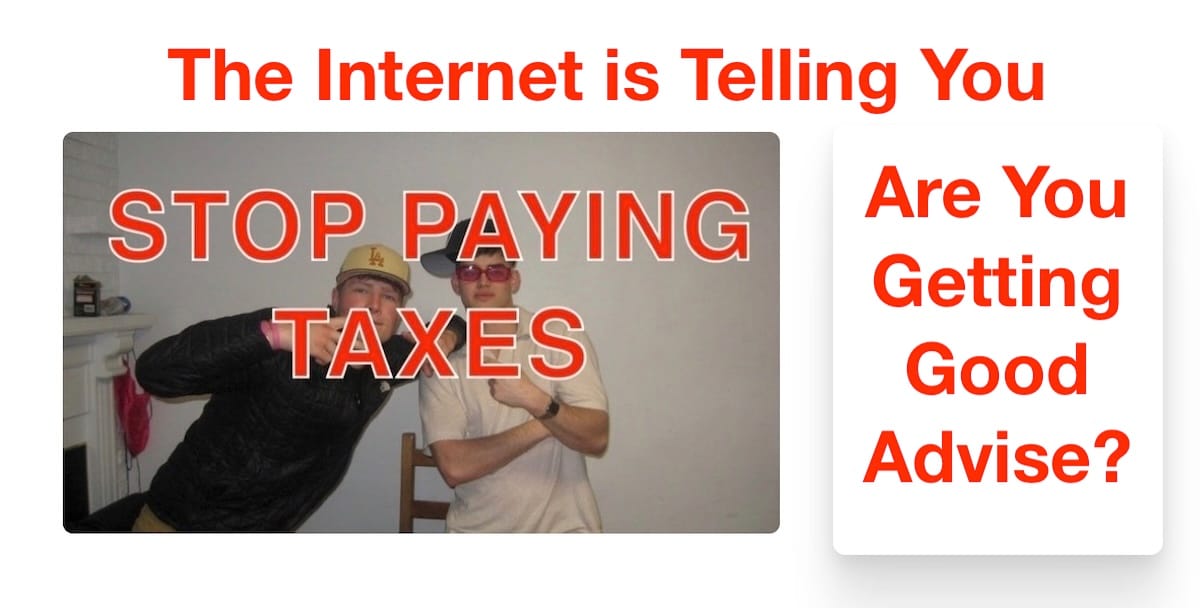
Every few years, usually when trust in government hits a new low, an old argument roars back to life:
- Paying taxes is voluntary.
- The Constitution doesn’t require it.
- The tax code isn’t compulsory law.
This time, the call isn’t just coming from the libertarian corners of the internet. It’s showing up in liberal spaces, too, framed as protest, as resistance, and as a refusal to bankroll policies and leadership people find immoral or dangerous.
The anger behind this moment is real. The argument behind it is not.
And confusing the two can hurt people who are already stretched thin.
Why This Argument Keeps Coming Back
When people feel unheard, overworked, and politically sidelined, they start looking for pressure points. Taxes feel like one of the last levers ordinary people can pull.
Libertarian movements have long framed taxation as coercion. More recently, some progressives have framed nonpayment as a form of complicity refusal. Different politics. Same pressure valve.
The appeal is obvious. If paying taxes is optional, refusing to pay becomes a powerful moral stand rather than a personal risk.
But that premise is FALSE.
The Dangerous Half-Truth: “Voluntary Compliance”
You’ll often see this phrase cited as proof that income tax isn’t mandatory.
It’s true that the U.S. tax system relies on self-reporting. You calculate what you owe, file the forms, and send the payment.
That’s where “voluntary” ends.
The obligation to file and pay is established by federal law and has repeatedly been upheld by the courts. Judges no longer debate this point. They dismiss arguments to the contrary as frivolous and move on to penalties.
What gets lost online is that voluntary compliance describes the process, not the choice.
The Constitutional Claim That Won’t Die
Another version of this argument holds that the Constitution never authorized an income tax, or that the authorization was invalid.
That debate ended in 1913. Last I checked, an amendment to the Constitution is the Constitution.
The Sixteenth Amendment explicitly granted Congress the power to tax income. It has been enforced continuously for more than a century. Courts at every level have rejected claims that it doesn’t apply to individuals, wages, or private citizens.
These aren’t open questions. They’re settled law.
That matters because people repeating these claims online rarely mention what happens next.
Protest vs. Civil Disobedience
There is a long, honorable tradition of refusing to obey unjust laws. Thoreau did it. Civil rights leaders did it. Labor organizers did it.
But there’s an important distinction that often gets erased online:
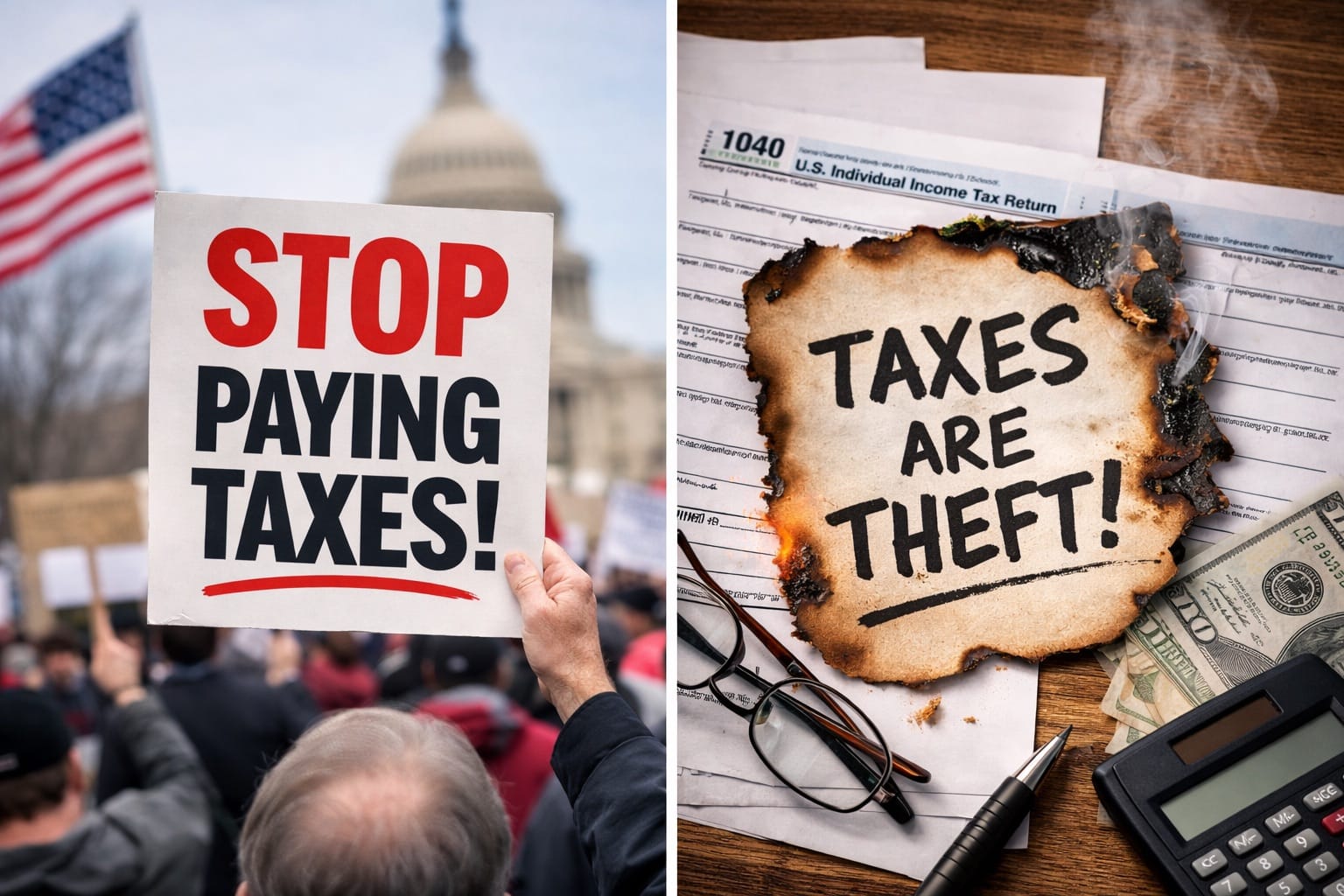
Civil disobedience does not mean consequence-free disobedience.
Historically, tax resistance worked because people accepted the penalties and used them to expose injustice. They planned for the fallout and understood the stakes.
What we’re seeing now is something else. A flood of social media posts suggests people can opt out of paying taxes without legal risk. That isn’t a protest. It’s misinformation with a body count measured in liens, garnishments, and court dates. If you’re going to resist, you deserve to know what you’re actually risking.
Messaging matters as much as tactics.
Calls to refuse taxes can feel like a powerful escalation, especially amid political frustration. They tap into moral outrage and offer a clear, emotionally satisfying pressure point. But unlike many forms of economic non-participation, tax refusal carries immediate statutory exposure that is unevenly distributed among participants.
In shaping GeneralStrike.net, we considered a wide range of strike tactics. In the interest of movement longevity and participant safety, our legal counsel advised us to avoid encouraging tax nonpayment because of the substantial legal risks it entails.
Movements are strongest when risk is intentional, informed, and collectively supported. When high-risk tactics circulate as casual suggestions or viral slogans, individuals may act without fully understanding the legal, financial, or personal consequences. That doesn’t amplify a movement; it isolates people within it and can place grassroots organizers and movement infrastructure at risk, from platform shutdowns to legal exposure.
Historically, successful tax resistance campaigns required extensive preparation, legal strategy, mutual aid, and a shared understanding that penalties were likely. They were not spontaneous online mobilizations but coordinated acts of civil disobedience with contingency plans.
For organizers planning general-strike activity, the strategic question isn’t whether tax resistance carries symbolic power. It’s whether the movement can absorb the fallout for participants. Without that support structure, pressure shifts from institutions to already vulnerable individuals.
A general strike depends on collective leverage that can be sustained over time. Messaging that warns of severe legal exposure without preparation risks undermining that sustainability and fracturing the solidarity that movements rely on.
Protecting participants isn’t caution. It’s strategy. If you are seeking lower-risk approaches that still generate meaningful pressure, our resource library and Survival Guide outline methods that scale without leaving participants legally exposed.
Why This Matters to a General Strike
A general strike isn’t about individual acts of desperation. It’s about coordinated, sustainable pressure that doesn’t collapse the people it’s meant to empower.
Unplanned tax resistance doesn’t weaken an administration. It weakens individuals, especially those without lawyers, savings, or institutional protection.
Burnout is a strategy used against movements. So is encouraging people to take legal risks without adequate preparation.
That’s why knowing your rights matters. And why understanding the line between protest and exposure matters even more.
If you’re looking for grounded, practical information on what protesters can and cannot legally do, we maintain a growing resource library at GeneralStrike.net/know-your-rights. It’s designed for exactly this moment.
There Are Legal Ways to Apply Pressure
This isn’t a call to compliance for its own sake. It’s a call to be strategic.
History shows that movements win when they:
- Organize collectively instead of acting alone
- Choose pressure points that scale
- Protect participants from unnecessary harm
- Pace themselves for the long haul
There are lawful ways to protest an administration. Lawful ways to withdraw consent. Lawful ways to disrupt business as usual without handing the state an easy win.
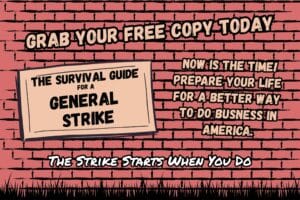 Many of those strategies are outlined in the Survival Guide for a General Strike, which focuses on sustainable resistance, financial resilience, and coordinated action that doesn’t leave people isolated or legally exposed. Best part is: “The Survival Guide for a General Strike” is FREE!
The Bottom Line
The idea that paying taxes is optional under U.S. law isn’t accurate — and it hasn’t been for a long time.
What is real is the frustration people feel. Many are tired, worried about the future, and seeking meaningful ways to push back. That instinct makes sense. But acting on incomplete or misleading information can cause harm where people are already under strain.
Movements that endure are movements that prepare. Movements that succeed are those that understand the landscape well enough to apply pressure without putting their own people at unnecessary risk.
If you’re feeling called to resist, do so thoughtfully. If you’re organizing, lean on one another. And if you’re looking for grounded ways to take action, we’ve been building tools to support that journey.
Dancing Quail
P.S. If you’re a CPA or tax professional interested in helping people navigate these questions responsibly, we’d welcome your voice. Please reach out anytime at support@generalstrike.net


