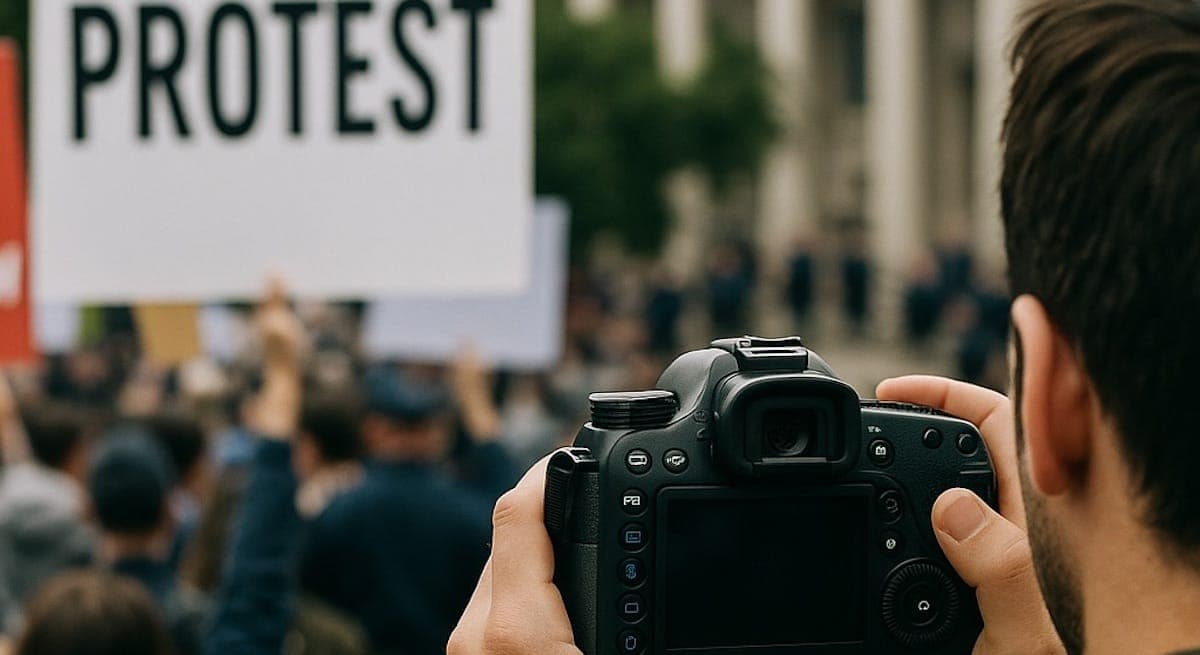
I want to take pictures or shoot video at a General Strike
You have the right to record public events, including protests, but understanding the limits and protections is important.
Your Rights
In public spaces: When you are legally present in a public area (such as streets, sidewalks, parks, or plazas in front of government buildings), you are allowed to photograph or film anything visible — including federal buildings, police officers, and other public officials.
On private property: Property owners can establish rules for photography or videography. If you don’t have permission, you might be asked to leave.
Disclaimer: This article is for informational purposes only and does not constitute legal advice. Laws and enforcement practices vary by jurisdiction. For advice specific to your situation, consult a qualified attorney or a trusted legal advocacy organization.
Police powers:
Officers cannot:
- Confiscate or demand to view your images or recordings without a warrant.
- Delete your files under any circumstances.
- Order you to stop recording unless you are genuinely interfering with legitimate law enforcement operations.
Video vs. audio
Still photography and the visual part of video recordings are fully protected. The audio track of a video may be regulated by certain state wiretapping laws — check your state’s laws before recording conversations.
If You Are Stopped or Detained
- Stay calm — never physically resist a police officer.
- Ask if you are free to leave — if yes, walk away calmly.
If Detained, Ask:
- “What crime am I suspected of committing?”
- Politely remind them that photography is protected under the First Amendment and is not a reasonable suspicion of criminal activity.
Reasonable suspicion is required: Police cannot legally detain you without believing you are committing, about to commit, or have already committed a crime.

If You Believe Your Rights Have Been Violated
- As soon as you can, write down everything you remember:
- Officers’ badge numbers, patrol car numbers, and agency names.
- Get witness contact information.
- Photograph any injuries you sustained.
File a written complaint with the agency’s internal affairs division or a civilian complaint board.
UPDATE 1/17/2026
Due to recent events in American cities the
No King Movement provided this live cast
to discuss your right as you document or record ICE activities.
 More Resources:
 More Resources:
- ACLU: Protesters’ Rights
- Freedom Forum: Legal protections for photographers
- Constitutional Protest Guide