The Un-Buy: What Happens When Spending Stops for One Day
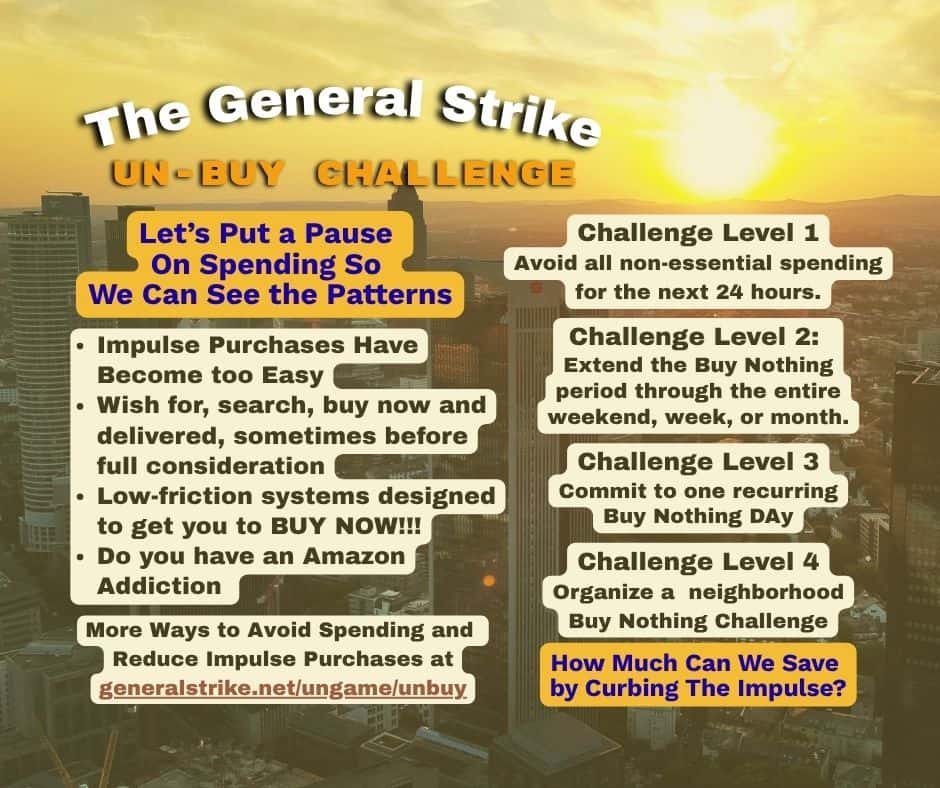
Your Move Today: Avoid all non-essential spending for the next 24 hours.
You have reached Day 2 of the Un-Game board, still moving through the Awareness Zone. At this early stage of the journey, the goal isn’t to completely overhaul your life overnight. Instead, the goal is simply to notice patterns that normally run in the background.
Most spending today happens almost automatically. A quick order online. An impulse buy in the grocery aisle. A digital payment that feels so frictionless it barely registers. None of these actions are inherently harmful, but the speed and convenience of modern payment systems can make spending feel invisible.
When spending becomes automatic, reflection quietly fades away. And when reflection fades away, intention often follows.
Today’s move simply creates a pause.
Automatic spending rarely feels like a decision.
A notification appears with a limited-time offer. A saved payment method removes the need to think about the transaction. A small purchase slips through because it feels insignificant.
Over time, these small moments accumulate into a pattern of participation that often goes unnoticed.
Many people never stop long enough to observe these patterns because modern payment systems are designed to make purchasing quick, convenient, and almost frictionless.
Today’s move simply introduces a pause long enough to see the pattern.
Today’s Challenge
Avoid all non-essential spending for the next 24 hours.
For one day, choose not to purchase anything that is not absolutely necessary.
The goal is not deprivation. The goal is awareness.
We do this to observe our spending impulses and direct our finances intentionally.
If this aligns with your values, take this step.
Simple Directions Explained
Step 1: Decide when your 24-hour window begins.
Choose a clear start time so the experiment feels intentional.
Step 2: Pause non-essential purchases.
Throughout the day, avoid buying items that are not necessary for health, safety, or immediate responsibilities.
Step 3: Notice impulses as they arise.
If you feel the urge to buy something, simply pause and observe the impulse. You do not need to judge it or resist perfectly.
Step 4: Write down one observation.
At the end of the day, note one moment when you noticed an impulse to spend and what triggered it.
Extended Challenge
Level 2: Extend the Buy Nothing period through the entire week, weekend, or month.
Level 3: Organize a small neighborhood Buy Nothing challenge or have a conversation with others about the experience.
Level 4: Commit to one recurring monthly Buy Nothing Weekend and invite at least three people to join you.
These levels expand the experiment outward from personal awareness to shared participation.
Adapt these levels to your reality. You know your circumstances best.
Why This Matters
Modern commerce increasingly depends on minimizing the reflection involved in spending decisions.
Digital wallets, saved payment methods, automatic card storage, and one-click checkout all aim to eliminate friction between the desire to buy and the actual purchase.
This convenience can be helpful, but it can also reduce the pause that once existed between considering a purchase and completing it.
When we intentionally pause spending for a short period of time, we begin to notice how frequently the urge to buy shows up during a typical day.
That awareness changes how we participate.
Small interruptions reveal patterns that usually stay hidden. Purchases that could be made with minimal effort for less money may begin to seem like voluntary participation in our own financial extraction.
We do this to make our spending decisions intentional instead of automatic, giving us greater control over our finances.
Structural Impact
Modern consumer systems rely heavily on predictability.
When companies can estimate how frequently people purchase certain items, they can forecast revenue, plan production, and design advertising strategies with remarkable precision.
Impulse purchasing plays a significant role in this forecasting model. Small, frequent purchases generate steady and reliable income streams for retailers and digital marketplaces.
When individuals pause spending, even briefly, that predictability becomes less certain.
This does not collapse the system. Nor should it.
Sudden disruption without preparation can create instability and power vacuums that harm communities.
Instead, this challenge represents something different: a redesign of participation.
We are dependent on many modern systems because they were designed. Their efficiency makes participation easy. All to often that ease becomes automatic.
Strategic pauses allow us to reintroduce conscious decision-making into those systems.
When enough people begin making intentional choices about when and where they spend money, the market gradually adapts.
Businesses must respond to informed consumers rather than automatic behavior.
Over time, this creates the possibility of a healthier economic environment where participation reflects intention rather than habit.
A Note of Reflection
Notice what it felt like to introduce a pause into your spending habits today.
Were there moments when the impulse to buy appeared unexpectedly?
Did you notice patterns connected to boredom, convenience, or routine?
Before beginning the Un-Game, many of these moments might have passed unnoticed.
Awareness is the first step in redesigning participation.
Closing Acknowledgment
Participation in the Un-Game is voluntary. Just considering the challenge is participation. Progress over perfection.
If you paused spending for the full day, that is a meaningful step. If you simply noticed a few impulses to spend, that awareness still counts.
Most people move through modern spending systems without ever examining them closely.
You paused long enough to look.
That single pause will change how you participate.
Helpful Tools
Buy Nothing Project
Buy Nothing Project community network
YNAB Budgeting Tool
YNAB budgeting method
EveryDollar Budget Tool
EveryDollar budgeting system
Consumer Financial Protection Bureau – Budgeting Guide
CFPB guide to managing spending and budgeting
Federal Reserve – Household Economic Well-Being Report
Federal Reserve report on household financial behavior