What Is a Virtual General Strike?
A general strike has always been defined by collective withdrawal. Workers step away from production, consumers pause spending, and communities interrupt the routines that sustain economic power. Historically, that withdrawal took place in factories, storefronts, and public streets. As work and commerce moved online, however, the terrain of the general strike expanded.
The Virtual General Strike emerges from this shift as a modern general strike strategy targeting the digital infrastructure that powers contemporary economies. Rather than factory walkouts alone, participants withdraw digital labor, digital spending, and online engagement. In doing so, they interrupt the flows of data and attention that drive corporate profits and platform influence.
A virtual general strike is not simply logging off. It is coordinated digital non-participation. When participation itself becomes the economic engine, absence becomes the disruption.
This is why the virtual general strike is best understood as a companion strategy to the Consumer Picket Line. Where consumer picket lines disrupt physical commerce, the virtual general strike disrupts digital participation. Together, they are part of a multi-layered general strike framework capable of influencing hybrid economies.
Why the Virtual General Strike Is Essential to a Modern General Strike
The modern economy is inseparable from digital infrastructure. Remote work platforms, gig apps, streaming services, smart devices, and social media ecosystems generate enormous revenue from user engagement. Every login, click, stream, and transaction contributes to an economy built on attention and data.
A general strike that ignores digital participation leaves a major power center untouched. The virtual general strike addresses this gap by recognizing that digital engagement is labor, data is value, and presence is economic value. That means that when you scroll, you create value for big data. Every click. Every thumb stop. Every fraction of a second spent on every portion of the feed is monetized.
To understand how digital participation functions as strike leverage, it helps to look at the different ways value is generated online.
Digital Participation as Labor
Many people contribute unpaid labor online through:
- Content creation
- Engagement metrics
- Data generation
- Algorithm training
- Gig-based platform work
Withholding these contributions during a virtual general strike reframes participation as a conscious choice rather than an automatic behavior. Consider the impact if hundreds of thousands of people collectively logged off social media for a week. If the algorithms can measure how long you watch a cat video, they are sophisticated enough to detect when your behavior changes and you actually log off. This philosophy of coordinated individual non-participation sits at the heart of many general strike tools.
Those metrics also apply when you remove an app from your phone.
Attention as Currency
In an advertising-driven economy, attention is a commodity. A virtual general strike disrupts that commodity by producing measurable drops in engagement metrics and traffic patterns. Silence, in this context, becomes an economic signal.
Digital Spending as Economic Leverage
Subscription services, in-app purchases, and online retail generate recurring revenue streams that are highly sensitive to user behavior. Coordinated pauses in digital spending reflect the same pressure that consumer picket lines exert on brick-and-mortar businesses.
Together, these dynamics reveal that digital engagement operates as a layered economic system. Labor, attention, and spending reinforce one another, meaning that withdrawing participation across even one layer can ripple through the entire platform ecosystem.
Historical and Contemporary Examples of Virtual Strike Behavior
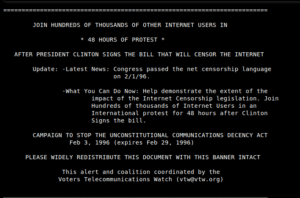
Virtual general strike behavior often emerges before the language exists to describe it, and over the past decade several moments of coordinated digital disengagement have revealed how collective absence can influence corporate decisions and reshape cultural narratives.
These examples span different sectors but share a common lesson: coordinated digital disengagement reshapes corporate incentives.
Platform Boycotts and Data Withdrawal Movements
Movements such as #DeleteFacebook demonstrated how mass user disengagement can influence corporate reputation, investor confidence, and regulatory scrutiny.
The #DeleteFacebook campaign emerged after revelations that the political consulting firm Cambridge Analytica had harvested personal data from millions of users without clear consent and used it to build targeted political messaging profiles.
👉 The Guardian coverage of Cambridge Analytica scandal
For many people, the scandal crystallized long-standing concerns about data privacy, opaque algorithms, and the commodification of personal information.
The hashtag spread across social media, calling on users to delete or deactivate their accounts, reassess their relationship with the platform, and demand stronger privacy protections.
While not everyone permanently left, the campaign succeeded in shifting public discourse and drawing global media attention to platform accountability.
High-profile figures publicly deleted their accounts, advertisers reconsidered spending, and lawmakers intensified calls for regulation and transparency.
The movement illustrated how coordinated digital disengagement can function as a form of virtual strike behavior: users leveraged their participation as economic and cultural capital, signaling that trust is inseparable from engagement.
The #DeleteFacebook movement reinforced a central principle of the virtual general strike: that coordinated withdrawal of data, attention, and platform loyalty can create pressure capable of shaping corporate policy and public discourse.
Advertiser Boycotts and YouTube’s “Adpocalypse”
The #StopHateForProfit advertiser boycott further illustrated how coordinated withdrawal of engagement and revenue can pressure platforms to respond.
Organized by a coalition of civil rights groups including the Anti-Defamation League, NAACP, and Color of Change, the campaign called on companies to pause advertising on Facebook and Instagram in protest of what organizers described as inadequate moderation of hate speech, disinformation, and harmful content.
Rather than targeting individual users alone, the boycott focused on the economic engine of social media platforms: advertising revenue. By encouraging brands to temporarily halt ad spending, the campaign reframed platform accountability as a shared responsibility between users, advertisers, and corporations.
Hundreds of major brands ultimately joined the effort, creating a wave of reputational pressure and sparking global media coverage about the relationship between content moderation and platform profitability.
While the long-term financial impact was debated, the boycott succeeded in forcing public dialogue, prompting meetings between organizers and company leadership, and leading to policy announcements related to content enforcement and transparency.
The YouTube advertising backlash and subsequent advertiser boycotts reinforced a central principle of the virtual general strike: that targeted withdrawal from key revenue streams can shift corporate behavior by transforming participation into negotiable economic leverage.

Late-Night Shutdowns and Entertainment Labor Disputes
In September 2025, ABC, a network owned by The Walt Disney Company, temporarily suspended production of Jimmy Kimmel Live! amid controversy over monologue commentary and criticism from broadcast affiliate conglomerates and federal regulators.
The decision sparked an immediate national debate over media independence, political pressure, and the concentrated power of corporate media conglomerates.
Calls to boycott Disney and its affiliated platforms spread quickly online, reflecting growing public concern about consolidation that shapes which voices remain visible in mainstream media and how those voices are influenced by broader corporate and regulatory considerations.
The backlash was not merely rhetorical. Later data showed that cancellation rates roughly doubled compared with typical monthly averages, indicating that coordinated audience disengagement had tangible economic consequences.
The wave of subscription pauses and boycott messaging illustrated the mechanics of virtual strike behavior: viewers leveraged their subscriber status to express dissatisfaction and signal that trust and participation are inseparable.
The backlash surrounding Jimmy Kimmel’s suspension reinforced a central principle of the virtual general strike: that decentralized waves of audience disengagement can influence corporate decision-making within highly consolidated media ecosystems.
This article will give you more context.
Smart Device Disconnection and Surveillance Backlash
A recent Ring controversy highlighted how consumer technology can quickly become a focal point of broader debates about surveillance, privacy, and public accountability.
The company promoted an AI-assisted feature called “Search Party,” which positioned networked doorbell cameras as tools for locating lost pets and for fostering neighborhood cooperation.
While marketed as a community safety innovation, the campaign reignited concerns about how aggregated camera networks intersect with law-enforcement surveillance, particularly given past reports of information sharing between smart-home platforms and agencies within the U.S. Department of Homeland Security, including immigration enforcement operations.
👉 Electronic Frontier Foundation reporting on Ring surveillance concerns
As coverage noted, the backlash intensified after viewers connected the Super Bowl advertising narrative to unresolved questions about data access, facial recognition, and the normalization of networked surveillance infrastructure.
The response mirrored a form of virtual strike behavior. Some users disengaged by disabling features, reconsidering their subscriptions, or publicly questioning their participation in neighborhood camera ecosystems.
The pressure also prompted scrutiny of Ring’s partnerships, including its relationship with Flock Safety, a company known for its license-plate recognition technology used by law enforcement.
The pervasiveness of digital surveillance within corporate ecosystems, such as Amazon’s, may have created a blind spot, leading decision-makers to underestimate how many people remain unwilling to accept surveillance as the price of convenience.
When participation in surveillance networks depends on voluntary user engagement, coordinated hesitation or withdrawal becomes economically and reputationally significant.
This moment illustrates how digital surveillance concerns can catalyze virtual general strike dynamics: individuals leverage their roles as data contributors and device operators to signal the boundaries of acceptable use.
The consumer response to Ring’s surveillance concerns reinforced a central principle of the virtual general strike: that individual technology choices, when made collectively, can challenge the normalization of digital infrastructure and redefine the boundaries of participation.
The Future of the General Strike includes a Virtual Strategy
Taken together, these four examples illustrate the evolving mechanics of the virtual general strike across sectors of the digital economy.
From social media platforms and advertising ecosystems to entertainment media and smart-home technology, each case shows how coordinated non-participation can create measurable pressure without centralized leadership or physical presence.
The common thread is not the platform itself but the recognition that participation, whether through data, subscriptions, attention, or device engagement, serves as economic infrastructure.

When individuals withdraw their participation in visible, coordinated ways, corporations are compelled to respond, reassess their messaging, or adjust their policy. These moments reveal the virtual general strike as more than a symbolic protest; it is a practical strategy for exercising collective leverage in an increasingly digital society.
As platform dependence continues to grow, the lessons from these examples suggest that virtual strike tactics will remain a useful and adaptable tool for future movements seeking accountability, transparency, and structural change.
The next question is not whether a virtual general strike is possible, but how it shows up in daily life when people intentionally step away from the systems they power. Beyond individual participation, the virtual general strike reflects broader structural shifts that make digital disengagement increasingly consequential.
What a Virtual General Strike Looks Like in Practice
A virtual general strike centers on coordinated absence. Participants step away from digital routines to disrupt economic signals while signaling collective intent.
Some individuals withdraw from remote work platforms for a set period, allowing auto-responses to signal their absence while reinforcing the collective nature of the action. Others pause nonessential online spending, cancel subscriptions, or avoid logging in to gig platforms whose availability depends on constant user participation.
Social media engagement may decline as participants post explanatory messages or choose silence, allowing the absence itself to become part of the message.
What makes the virtual general strike uniquely accessible is that participation can unfold through small, intentional shifts rather than dramatic gestures.
A participant might start by logging out of social media for a day, noticing how quickly platforms try to re-engage them with notifications and emails. Another might postpone a planned online purchase, using that moment of convenience to reflect on consumption habits. Someone else may disable data-sharing settings on a smart device, recognizing that even passive participation contributes to the broader digital infrastructure.
Each of these actions is modest on its own, yet when practiced collectively, they produce the measurable anomalies that define virtual strike pressure.
These moments can be approached as personal experiments in coordinated non-participation.
Are You Up for a Challenge?
Here are some examples of virtual strike actions you can do individually, as part of a collective social response, or coordinated with others
These ideas can be practiced as small, accessible challenges that encourage intentional participation in virtual strike dynamics.
- The 24-Hour Log-Out
Log out of one major platform for a full day. Notice how often you instinctively reach for it and how quickly the platform attempts to pull you back through notifications or emails. - Subscription Pause Challenge
Review your recurring subscriptions and temporarily pause one nonessential service. Treat the pause as a reminder that ongoing participation is a choice, not a default. - The Silent Scroll Break
Choose an evening to resist scrolling entirely. Replace digital consumption with reflection, reading, or community connection, observing how absence reshapes attention. - Gig App Blackout Window
If you participate in gig platforms, set aside a defined window where you intentionally remain offline. Even short coordinated pauses can highlight the human labor behind platform availability. - Smart Device Awareness Check
Review the data-sharing settings on a smart device you use daily. Disable one nonessential permission and reflect on how convenience and surveillance often overlap. - Conscious Spending Pause
Delay one planned online purchase for 24 hours. Use the pause to consider alternatives, local options, or whether the purchase aligns with your values. - Auto-Response for Collective Absence
Set a short auto-response explaining that you are offline as part of a digital pause or virtual strike reflection. This transforms absence into communication and invites curiosity from others.
These challenges are not about perfection. They are invitations to experiment with coordinated non-participation and explore how small acts of absence can contribute to broader virtual general strike dynamics.
The strategy does not rely on uniform action. It relies on shared intention. Measurable disruption occurs when many individuals withdraw from participation simultaneously, creating anomalies in engagement dashboards and analytics systems.
In a data-driven economy, such anomalies attract the attention of corporate decision-makers and investors alike. What appears to be silence from the outside often translates internally into declining metrics, altered user patterns, and questions about retention and sentiment.
This dynamic reflects a broader principle of general strike strategy: systems that appear stable often rely on invisible cooperation. When that cooperation is withdrawn, even temporarily, the underlying dependency becomes visible. The virtual general strike makes that visibility accessible to anyone with an internet connection and the willingness to pause participation.
For those interested in exploring this practice more intentionally, these small acts can be framed as ongoing challenges rather than one-time gestures.
The spirit behind them aligns closely with the philosophy of The Un-Game, which encourages participation with the idea of progress over perfection by experimenting with coordinated individual action in manageable ways.
Within that framework, virtual strike challenges become opportunities to build awareness, test boundaries, and practice collective leverage in everyday life. Each moment of intentional absence, no matter how brief, contributes to the broader understanding that participation in digital systems is not inevitable but negotiated.
Why the Virtual General Strike Matters Now
The relevance of the virtual general strike lies in broader structural shifts in economic and technological power. Platform monopolies concentrate influence across communication, commerce, and infrastructure.
Automation and artificial intelligence raise questions about future employment models. Surveillance technologies blur the boundaries between convenience and data extraction.
In this landscape, a general strike must operate across both physical and digital spheres. The virtual general strike offers a pathway for participation that is accessible, scalable, and adaptable to evolving conditions.
It also reinforces the philosophy of coordinated individual non-participation that underpins general strike theory. Collective action does not always require centralized leadership. Shared awareness and aligned decisions can produce meaningful disruption across dispersed networks. When individuals withdraw digital engagement in concert, the cumulative effect mirrors traditional strike pressure while lowering barriers to participation.
Critics often note that digital boycotts can be short-lived. Yet even temporary disengagement shapes narratives, influences media coverage, and signals consumer sentiment. More importantly, these actions cultivate awareness of participation as leverage. A virtual general strike may not transform systems overnight, but it contributes to the cultural and economic conditions that enable systemic change.
Virtual General Strike as a Core General Strike Strategy
Positioning the virtual general strike alongside the Consumer Picket Line clarifies its role within a broader strategy ecosystem. Consumer picket lines disrupt physical spending patterns. Virtual general strikes disrupt digital participation patterns These hybrid approaches are outlined across multiple resources in our general strike toolkit.
This framing helps move the virtual general strike beyond symbolic action. It becomes a strategic component of general strike planning, capable of reinforcing physical strike activity and expanding participation across diverse communities. As work and commerce continue to intertwine across physical and digital spaces, effective general strike strategies must address both.
Conclusion: Absence as a Strategy in the Digital Economy
A general strike has always challenged assumptions about inevitability. By pausing routines that sustain economic systems, participants reveal how those systems depend on collective cooperation. The virtual general strike extends this principle into digital space. It re-frames logging off from a personal act into a collective economic expression.
In an economy where presence and attention generate wealth, coordinated absence becomes a form of leverage. The virtual general strike reminds participants that they are not passive users but active contributors to digital infrastructure. Choosing when and how to withdraw participation highlights the contingent nature of systems that often appear permanent.
As general strike movements evolve, the integration of virtual strategies will likely deepen. Coordinated app logouts, subscription pauses, platform boycotts, and device disconnection all express the same principle: participation is power, and power can be withheld.
The virtual general strike does not replace traditional organizing. It expands it. By bridging physical and digital tactics, it offers a pathway for broader participation and more comprehensive pressure within contemporary general strike movements.
Dancing Quail
Managing Editior
For readers interested in preparing more intentionally, The Survival Guide for a General Strike offers a deeper exploration of these strategies.
Frequently Asked Questions About the Virtual General Strike
What is a virtual general strike?
A virtual general strike is a coordinated act of digital non-participation in which individuals withdraw online labor, attention, spending, or engagement to disrupt economic signals and demonstrate collective leverage. Rather than relying solely on physical work stoppages, a virtual general strike targets the digital infrastructure that modern economies depend upon, including platforms, subscriptions, and data ecosystems.
Is logging off social media really a form of protest?
Logging off becomes meaningful when it is intentional and coordinated. Platforms measure daily activity, engagement time, and retention patterns, meaning sudden drops in participation can signal dissatisfaction and shift internal analytics. When many individuals disengage simultaneously, absence itself communicates sentiment and can function as a form of virtual strike behavior.
How is a virtual general strike different from a boycott?
A boycott typically targets a specific company or product through refusal to purchase. A virtual general strike is broader, focusing on participation itself — including engagement, data generation, and digital labor. While boycotts may be part of a virtual strike, the strategy extends to any form of coordinated digital absence that disrupts platform dependence.
Who can participate in a virtual general strike?
One of the strengths of the virtual general strike is accessibility. Participation can come from remote workers, caregivers, disabled individuals, students, gig workers, or anyone whose economic or personal circumstances limit physical protest. Because digital participation is widespread, nearly anyone with an internet connection can take part in some capacity.
What impact can a virtual general strike actually have?
Examples across social media, entertainment, advertising, and smart-device ecosystems show that coordinated disengagement can influence corporate messaging, policy decisions, and public narratives. While not every action produces immediate change, virtual strike behavior can shift sentiment, generate media coverage, and create measurable economic pressure that organizations cannot easily ignore.
Do I have to completely log off to participate?
No. Virtual strike participation exists on a spectrum. Some people fully disengage for a defined period, while others pause subscriptions, delay purchases, disable features, or limit platform use. Even small actions contribute to broader patterns of coordinated non-participation and help reinforce awareness of participation as leverage.
How can I prepare for a virtual general strike?
Preparation may include setting auto-responses, pausing recurring subscriptions, notifying collaborators of temporary absence, and planning offline activities that replace digital routines. Many people also explore small practice challenges before participating in larger coordinated actions, building familiarity with intentional disengagement.
Where can I find ideas for virtual strike participation?
Virtual strike participation can begin with simple experiments such as logging out for a day, postponing online purchases, or reviewing data-sharing settings. For those seeking more structured exploration, challenge-based approaches like the Un-Game offer accessible ways to practice coordinated non-participation and build awareness of everyday leverage.
Ready to Practice the Virtual General Strike?
The virtual general strike is not a single moment. It is a practice. It lives in the small decisions we make every day about where we spend, what we click, what we share, and when we step away. Each intentional pause reminds us that participation is not automatic — it is a form of power we can reclaim.
If you’re curious about exploring this power in a structured, supportive way, the Un-Game offers a space to experiment with coordinated individual action through simple, approachable challenges.
Designed around progress over perfection, it invites participants to test boundaries, build awareness, and discover how small acts of non-participation can ripple outward into collective leverage.
You don’t have to be perfect. You don’t have to take on every challenge. You simply have to begin noticing your relationship with the systems you power. The Un-Game is an invitation to practice that awareness with others who are asking the same questions and taking similar steps toward intentional participation.
If this article resonated with you, consider stepping into the next experiment.
Explore the challenges, adapt them to your life, and see what changes when absence becomes intentional.
👉 Discover the Un-Game and begin your first challenge today